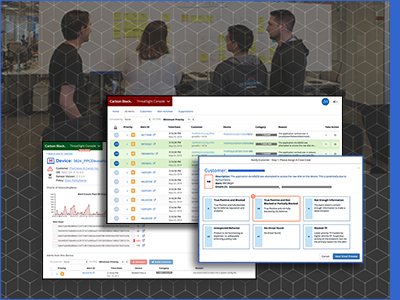
Project Snapshot
- Replace the Google Sheet tracking system with a purpose-built analyst workbench
- Automate customer email notifications to eliminate manual errors
- Build analyst trust by involving them directly in design sprints throughout the process
- Deliver a functional application iteratively within a scrum process across 3 program increments
The application was relied on by analysts for several years after delivery. The trust problem was solved not by features, but by process — weekly design reviews and direct collaboration turned a team that had abandoned one tool into advocates for the next.
Alert ownership by avatar click — analysts claim an alert simply by clicking their initials. No assignment workflow, no Google Sheet.
"I don't even think about it, it just works."— ThreatSight analyst
Research & Insights
Personas
The product's users were internal security experts represented by two personas, Sarah (SOC Analyst) and Adam (Security Analyst). Aligning the product with these personas was useful for involving our analysts in user testing and design feedback, making them a valuable resource for our UX team.
Interviews
We understood there was a trust issue with the initial system, so the Product Owner and I interviewed the Analysts to understand their daily tasks and software concerns. We found that they were pulling data from the system and managing processes using external systems like Google Sheets, leading to past errors and potential future issues.
Process Flows
Process flow diagrams captured the before and after state of the analyst workflow across each program increment — making the UX impact visible to product leadership and the engineering team in a language they could all read.
Wireframes
Wireframes were presented at every design sprint — weekly sessions where analysts could react, redirect, and validate before a single line of code was written.
Design Decisions
Final Screens
Being architecturally separate from the main product was a double-edged sword. It let us iterate and ship every sprint without waiting on platform dependencies — but it also meant no access to the component library. We made a deliberate call to prioritize speed and functionality over visual polish. The plan was always to bring the designs in line with the component library once the core system was complete and proven.